HeaTogether is a European initiative accelerating the decarbonisation of existing urban building stocks through an often-overlooked solution: neighbourhood heating and cooling (H&C) networks. These low-temperature or anergy-based systems connect multiple buildings and use locally available renewable energy sources, acting as a scalable “gap filler” between district heating and individual systems.
The project supports 15 pioneer neighbourhoods in four Central European countries in developing implementable, investment-ready concepts for renewable H&C networks. At the same time, HeaTogether strengthens the capacity of cities and energy agencies and promotes wider replication across Europe through targeted knowledge sharing.
With an expected investment potential of €155 million and emission reductions of up to 80% per neighbourhood, HeaTogether contributes directly to Europe’s heat transition.
We invite you to follow our progress via our LinkedIn page and website and share this newsletter with colleagues who are interested in neighbourhood-based energy solutions.
During the Prague meeting, the consortium also began developing an upcoming policy paper titled “Neighbourhood heating and cooling networks: policy strategies for an overlooked approach to decarbonise (sub)urban heat supply.” The publication will highlight the untapped potential of neighbourhood heating and cooling networks and present key policy recommendations to strengthen their role in Europe’s heat transition. Stay tuned for its release in the coming weeks.
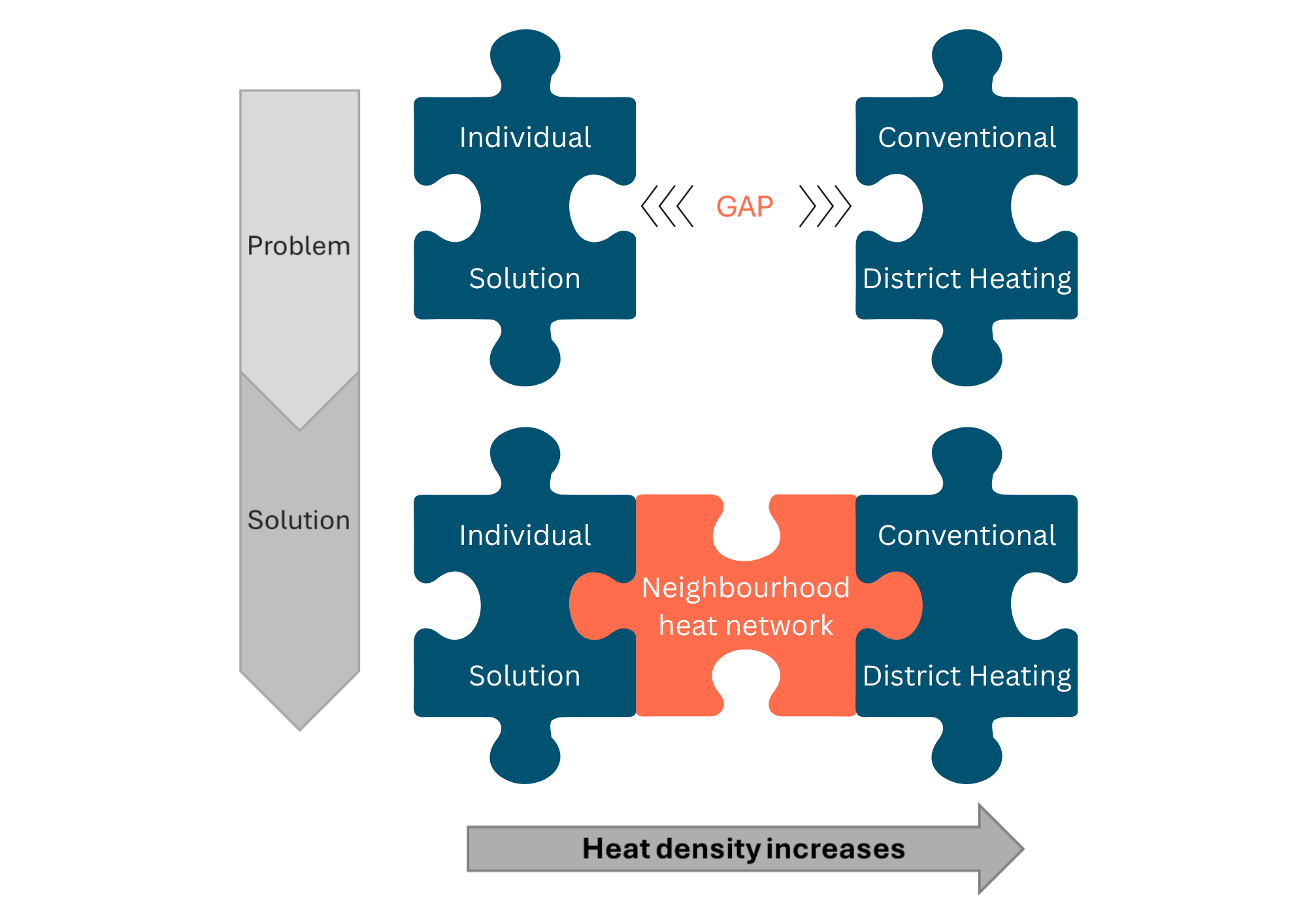
Decarbonising heating and cooling in dense urban and suburban areas remains a major challenge, as the two dominant systems, large district heating networks and individual building solutions, both face structural limitations. District heating networks often operate close to capacity, still rely partly on fossil fuels and require high heat density, while individual systems are constrained by limited space for technologies such as heat pumps, geothermal probes or PV installations and by higher costs due to missing economies of scale. Neighbourhood heating and cooling (H&C) networks offer a promising way to close this gap. These systems connect multiple buildings through low-temperature or anergy grids supplied by locally available renewable energy sources such as geothermal energy, groundwater, solar thermal energy, waste heat or ambient energy, typically combined with heat pump technologies. By sharing infrastructure and energy sources across buildings, neighbourhood networks can improve cost efficiency, overcome spatial constraints and even provide low-cost cooling as an additional benefit. While this approach is increasingly applied in new developments, practical implementation models for existing neighbourhoods are still limited, an important gap that HeaTogether aims to address through targeted support, feasibility analyses and investment planning for pioneering neighbourhood projects.
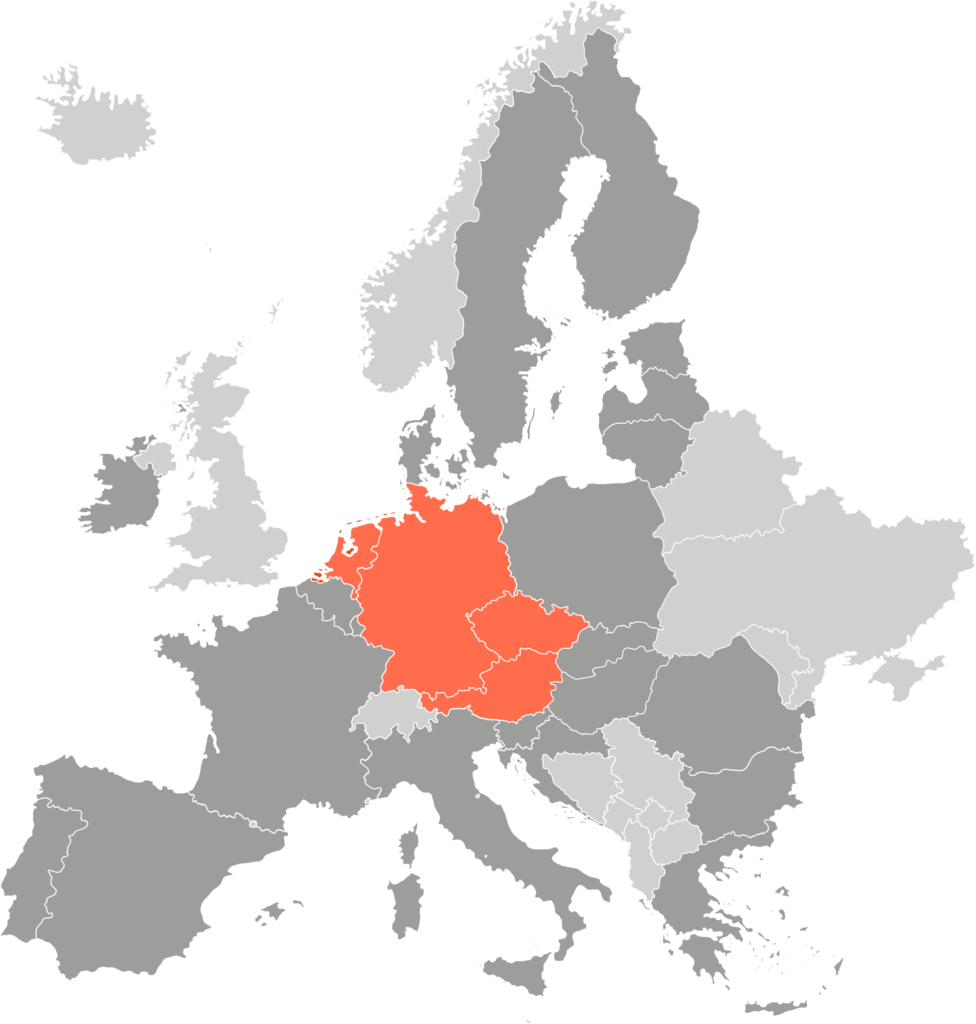
HeaTogether is driven by a strong and interdisciplinary consortium from Austria, the Czech Republic, Germany and the Netherlands. The partnership brings together leading research institutes, energy agencies, cooperative associations, universities and specialised consultancies.
For more information, visit: www.heatogether.eu